Thursday, August 6, 2009

Complicated nostalgia

So I read this book back in high school and remember being totally dazzled by it... He came up briefly in Nixonland (as a writer for the Chicago Daily News, he wrote of Daley's attempt to strong-arm his way into the '72 convention after the disaster of '68, "This is America, and someday Richard Daley may be able to earn a place inside the Convention Hall, just like Jerry Rubin. If the Mayor is willing to be patient and to work within the system.") and I thought, hey, let's revisit that!

And guys, there is a lot to like still. The book's a revised version of Greene's diary that he kept through 1964 on the advice of a journalist he hoped to emulate. A lot of it just feels universal (driving around listening to music, trying to get with girls, tight-knit groups of friends, etc.) and some of it is delightfully period-specific (the onset of Beatlemania). It's a really great snapshot of an era and a moment in life, basically.

Of course, some of it feels a little uncomfortable in light of more recent events -- Greene was dismissed from the Trib for having a sexual encounter with a 17 year old (age of legal consent, BUT also a part of a story he'd written, plus he was married) and the Reader, for a while, wrote scathingly of his coverage, claiming that he wrote puff pieces without doing actual research or getting facts-on-the-ground. Which makes the whole thing a little bittersweet (and a little factually dubious) now, and a lot harder to take in. Why is life so COMPLICATED?

Indians: They're Just Like Us! (Or: Pat Reads A Pulitzer)


In terms of form, I tend to be drawn to really stylistic work, really poppy stuff like Saunders or Thompson or (I'm just now discovering, post to come) Foer. It seems oddly more honest, somehow, to leave your stories in the hands of raving maniacs, simpletons, awkwardly-voiced bureaucrats, or (as in Asterios Polyp, my other current read) identical twins that died in the womb but stuck around to narrate their brother's story.

All of which is to say that Jhumpa Lahiri is not right in my wheelhouse -- a blend of first-person and third-person narratives, most of them with a limited omniscience, telling straight-up realist stories. But guess what? It's good! It can lean a little far into "let's get excited about food" prose, but there's a rich depth to the characters and the stories, spinning large emotion from relatively small arcs. Best, I think, are "This Blessed House" (a funny little explosive piece about a couple finding an endless trove of Catholic trinkets in their new home), "Sexy" (a brutal dissection of a brief and intense affair), and I think "When Mr. Pirzada Came To Dinner." But hey, it's all good. Will I seek out more Lahiri? Probably not until I've got more Foer under my belt at least, but she's all right, lads and ladies.

NIXON: Now more than ever!


Exhaustively detailed, expansive in scope, Rick Perlstein uses Nixonland to dig deep on what the 60s were, like, all about, man (i.e. a widening cultural split with increased polarization accelerated by mutual distrust and spiraling violence... wait, what did you think they were about?) and on how Nixon, that fresh-faced impish prankster, found the fault lines, jammed a wedge in, and pried the nation apart to claw his way to the top.

It's surprisingly balanced, phenomenally precise, and makes you want to watch every scrap of documentary footage about the Chicago Seven you can lay hands on.

It is also, not coincidentally, staggeringly overloaded with parallels to today (looking at the stumbling, increasingly ugly face of a desperate conservative minority, at the persistent use of mischaracterization and strawmen to reframe debates that barely exist to begin with, etc.). Perlstein ends the book saying we're still living in Nixonland, but within the first thirty pages you can't help but feel like this all sounds very familiar...

Pat's back from vacation, so here comes a glut

Summer reading! Gang, given the glut of theatre folk on this blog, I gotta say, if you can read The Devil's Candy, you really ought to. A fascinating, incredibly detailed look at the rambling catastrophe that is the making of a film, as Julie Salamon tracks Brian DePalma's film adaptation of Tom Wolfe's Bonfire of the Vanities. I don't know whether I prefer this to the book it makes reference to (the existence of Charlotte Simmons unfortunately mutes a lot of my original enthusiasm for Bonfire and Wolfe comes off as a bit of an opportunist here) but it's a rip-snorting fun and fascinating read. You'll see the predictable studio-bigwigs-ruining-everything narratives, but you'll also see the best depiction of batshit insane actors (Melanie Griffith gets a heaping extra bowlful of kudos on that count; Tom Hanks comes off pretty nice, but clearly is not wild about the people around him) that you can find, directorial hubris, and a generalized sense that making a movie is perhaps the hardest thing anyone could do, ever, and only a madman would do it for the crazily dumb people at the top of the chain. Guys, it's great! If only to read scenes that oh-so-subtly show you Melanie Griffith trying to jump Tom Hanks, and him gingerly trying to sidestep her come-ons. Awesome!

Monday, August 3, 2009

Fear and Loathing in Las Vegas


After thirty pellets of pure mescaline, three sheets of blotter acid, a sprinkle of cocaine, two handfuls of reds, a little taste of adrenochrome, a few deep inhales of ether, and a bottle of fine rum, I'm feeling like this book is fucking fantastic.

Sunday, August 2, 2009

Doing it For the Kids


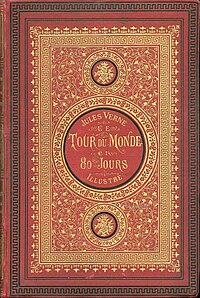
As you may or may not know, I teach drama at a summer camp. One of my responsibilities there is to write and direct the camp show at the end of each four week session. The choosing of the camp show is always a harrowing process, involving many arguments between me and camp director Sylvia. But it always works out in the end, as this summer we ended up with two wonderful, canonical, stories, Around the World in 80 Days and The Wizard of Oz. So, as I set out to adapt these oft-adapted tales for a 20 page, hour long, camp show, I decided to read the original (I went through a similar process last year with Peter Pan).

Both of these stories were intended for children, at least according to Barnes and Noble, who only had the Jules Verne novel in the Young Adults Classics section (Whereas L. Frank Baum's novel got the B&N Classics treatment). While I think Wizard of Oz will turn into a better camp show (thanks largely in part to the, on second viewing, incredibly odd and campy movie version), the book pretty much sucked. While the story is a classic, and it has some good themes, its pretty boring. Dorothy is very much a little girl, and the major characters pend most of their time repeating what they want (i want a brain! what about my courage! etc etc). All of the action scenes are short and seem like afterthoughts...Dorothy is in Oz within the first 2 pages (it takes longer in the script I wrote, and that clocks in at a double spaced 22), the witch dies five minutes after Dorothy gets there, etc. Theres no danger, no struggle, just a lot of declaiming and a few didactic lessons (though there are some cool parts that were removed from the movie, especially the china people kingdom and the men with no arms who shoot their heads at people). Overall though, the story is much better int he movie, its told with humor, verve, and, well, color that is missing in the novel.

Around the World in 80 Days, on the other hand, is dull but enjoyable. The story is also one that is fixed in our canons, but the original has some stuff to offer...there is no hot air balloon (maybe the single most iconic image from the movies), and the chase is actually pretty exciting...involving evil brahims straight out of Temple of Doom, opium overdoses, and gunfights with Native Americans. Fogg is as straightlaced as they come, so when he punches a detective or proposes marriage, its an earned and enjoyable surprise, something missing from the Wizard novelization. From the Verne books I remember, its not as captivating or groundbreaking (or prescient) but its a good yarn, nonetheless.

Both these stories are stories that we know, that we've seen, that we could largely tell without the aid of the novel. Are they worth reading anyway? Maybe in the case of Around the World, but I'd leave the wizard to Judy Garland and Burt Lahr.

Saturday, August 1, 2009

The magic happens only AFTER the lights go out...

I first discovered this little guy in a used bookstore near Wrigley Field. It had a pretty spine, so I plucked it out. And to my surprise, it was a Haruki Murakami novel, which excited me. Plus, it had a beautiful cover, which titillated me. And the back-cover praise was written in this extremely pleasing, colorful rainbow font, which just sent me over the edge (given my strong feelings about rainbows and colors). So, all of the above immediately moved this novel, which I knew virtually nothing about (I didn't even read the inside flap, for fear of spoiling things), to the top of my reading list (that's truly all it takes. I'm really easy). And now it's done.

So, hmm. What to say. The first five-sixths were... disappointing, sadly. After Dark is about one specific night in Tokyo, from the hours of midnight to seven a.m., and the general underbelly-ness that happens during the time of darkness. Definitely a fine idea, but in execution, it didn't really pan out. The translation felt a little off, and Murakami kept giving these weird, superfluous hints about what was going on, when in fact, it was actually quite easy to make the connections on my own, without the author's finger-pointing and unnecessary highlighting. So, I don't know. It wasn't what I was hoping for. But then something weird happened. The final sixth sliver was oddly (bafflingly)... incredible. I don't know why, or how. But there was one specific page where I was like, oh wait, this novel is actually really really good. And for the last 30 pages, it just clicked, and it was exciting, and all-around kind of wonderful. So now I'm all confused.

I think A Wild Sheep Chase was better. And of the two Murakami novels that I've read thus far, I would recommend the one about the sheep. But still, After Dark has left me oddly satisfied, considering I was planning on ripping the shit out of it until I got to page 161.